

July 19, 2026

If I’m choosing a collision shop in Lehi, I want more than a dent fix. I want a shop that checks hidden damage, works with insurance, matches paint the right way, and stands behind the repair with a written warranty.
Here’s the short version:
A few numbers stand out in this article: Dent Master Collision says it has served Lehi and Utah County for 32 years, holds a 4.9/5 rating from 207 reviews, has a 97% recommendation rate, and offers a Lifetime Warranty on covered repair work.
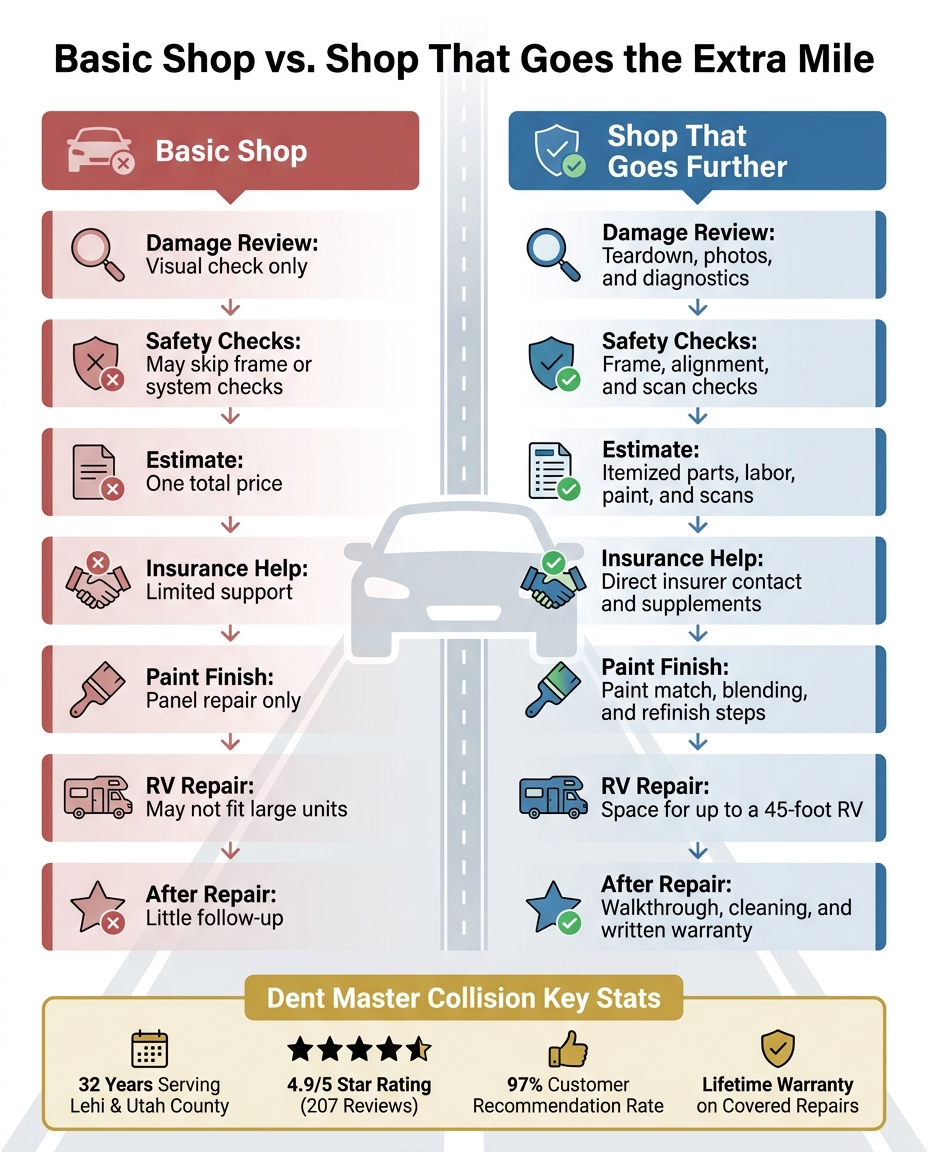
Basic Auto Body Shop vs. Full-Service Collision Repair: What's the Difference?
| What I’d check | Basic shop | Shop that goes further |
|---|---|---|
| Damage review | Visual check only | Teardown, photos, diagnostics |
| Safety checks | May skip frame or system checks | Frame, alignment, and scan checks |
| Estimate | One total price | Itemized parts, labor, paint, and scans |
| Insurance help | Limited | Direct insurer contact and supplements |
| Paint finish | Panel repair only | Paint match, blending, and refinish steps |
| RV repair | May not fit large units | Space for up to a 45-foot RV |
| After repair | Little follow-up | Walkthrough, cleaning, and written warranty |
So if I’m reading this article for the main takeaway, it’s simple: the right shop fixes what I can’t see, explains the job in plain language, and gives me proof the repair was done right.
A full teardown helps the shop find hidden damage before repair work begins.
When a vehicle comes in after a collision, a quick walk-around won't cut it. Technicians need to remove panels and inspect what's underneath to spot damage that doesn't show from the outside.
After that, the shop documents the full scope with photos. That gives them a repair plan based on everything the vehicle needs, not just the damage seen at drop-off. It also supports an itemized estimate and keeps the repair scope clear from the start. Once the damage is mapped out, the shop can put together a clear estimate and move into the insurance review.
Modern vehicles can have electronic or mechanical problems that a visual check alone can't judge. If a collision shifts the frame or unibody, it can throw off alignment and affect both handling and occupant protection.
"A computerized car diagnostic check... will give you a true picture of how your vehicle is running." - Dent Master Collision
Frame straightening uses hydraulic equipment to return the unibody or frame to its original specifications. Skip that step, and a vehicle may look fixed while still pulling to one side. That's why the repair plan needs to focus on safety, not just looks.
RV damage calls for the same teardown process, along with a check on parts availability. RV and motorhome repairs are more involved than repairs on a standard passenger vehicle because they include larger structural sections and more vehicle systems that need inspection.
"Our skilled technicians will thoroughly examine the damage done to your RV or motor home and give you a clear and honest estimate of the best way to repair the damage and its cost." - Dent Master Collision
There's another issue, too: parts. If manufacturer parts have been discontinued, spotting that early gives owners a more realistic repair timeline before work starts. It also helps keep the estimate and schedule lined up from day one.
After teardown shows the full scope of the damage, most owners want answers on three things: cost, timing, and the insurance claim. That’s where a good repair process starts to matter. You need clear written details at the start, then updates if the repair plan shifts.
A strong estimate should do more than show one final number. It should spell out labor, parts, paint, and diagnostics so you can see what the job includes. It also needs to match the full repair plan, not just the damage seen at first glance, but any hidden damage found after teardown too.
An online photo estimate can also help early on. Before drop-off, it can give you a starting repair range based on the photos you share.
A full-service shop doesn’t just fix the RV. It also documents the damage, works directly with your insurer, and handles supplemental approvals when added damage shows up. That back-and-forth matters because it helps keep the claim moving instead of letting the repair sit in limbo. Direct insurer communication and supplemental approvals help prevent delays.
Realistic timelines come from a careful inspection at the start and clear communication if the scope changes. If hidden damage shows up or parts are delayed, the schedule can stretch. When that happens, updates should be immediate and specific, not vague.
This matters even more with RV repairs. Parts may be discontinued, or the job may call for custom work, and that can change the timeline fast.
Once the cost, coverage, and timing are clear, the repair can move into body and paint work without surprises.
With the repair plan approved, the job moves from planning to finish and fit. At this stage, the shop needs to line up the repair method with the kind of damage on the vehicle.
Paint work is where a lot of repairs miss the mark. One off-color panel can stand out fast, especially in bright sunlight. And fixing that takes more than picking the nearest paint code.
Dent Master uses PPG paint products and waterborne base coats to support accurate color matching and durable refinishing. Just as much depends on the prep work, the blend, and the refinish process. When those steps are done well, the repaired area blends into the rest of the vehicle instead of looking like a patch job.
Paintless dent repair (PDR) works best for minor dings, small dents, and hail damage when the paint is still intact. That helps keep the original factory finish in place.
When the paint is cracked, the metal is stretched, or the panel is badly misshapen, standard body repair is the better path. That usually means reshaping the panel and refinishing it with a matched paint system. In plain English: the repair should fit the damage, not the other way around.
Frame straightening uses hydraulic equipment to return the structure to factory specifications. After that, the basics matter. Doors should open and close smoothly, body lines should look even, and parts should sit the way they should.
A computerized diagnostic check also confirms that vehicle systems are working as they should, not just the visible bodywork.
Once those checks pass, the shop can move to final delivery and warranty coverage.
Once the repair is done, one thing matters right away: will it hold up? A written warranty gives you a clear answer.
Dent Master Collision backs its collision repair, professional refinishing, and RV body repair with a Lifetime Warranty. That tells you the shop stands behind the work after you drive away.
The repair itself is only part of the experience. Convenience counts too, especially when you need your vehicle back without more hassle. Dent Master offers pickup or drop-off help, deductible assistance, and financing options to help ease the stress of the repair process.
Delivery day matters more than people think. A final walkthrough gives you time to look over the completed repair, check the fit and finish, and make sure the vehicle is clean before you accept it. Dent Master includes interior vacuuming and exterior cleaning as part of the delivery process.
If the shop doesn’t start a walk-around, ask for one. It’s a simple step, but it can help catch missed details before you leave.
When you put these details together, the difference is pretty clear. A basic repair shop fixes the damage. A better shop handles the full experience with careful inspection, clear communication, quality finish, and a proper handoff.
Dent Master Collision holds a 4.9/5 rating from 207 reviews with a 97% customer recommendation rate. Add in the lifetime warranty and convenience services, and the whole process becomes much easier to handle.
Hidden damage often doesn't show up in a quick walk-around, especially in newer vehicles packed with electronics.
A professional shop can spot issues with computerized scans that check safety, engine, and body systems. They’ll also do a multi-point inspection of the suspension, steering, and structural parts.
After the repair, post-repair scans help verify that systems like ADAS are working the way they should.
Yes. The shop helps with insurance claims, which makes the process easier and cuts down on paperwork.
That support usually includes:
Choose Paintless Dent Repair (PDR) for minor dents, door dings, or hail damage when the paint is still intact. It reshapes the metal without repainting or fillers, which helps keep the original factory finish in place.
For more serious damage, traditional auto body repair is the better fit. It’s used to restore the vehicle’s structure and appearance when PDR isn’t enough.
