

September 6, 2026
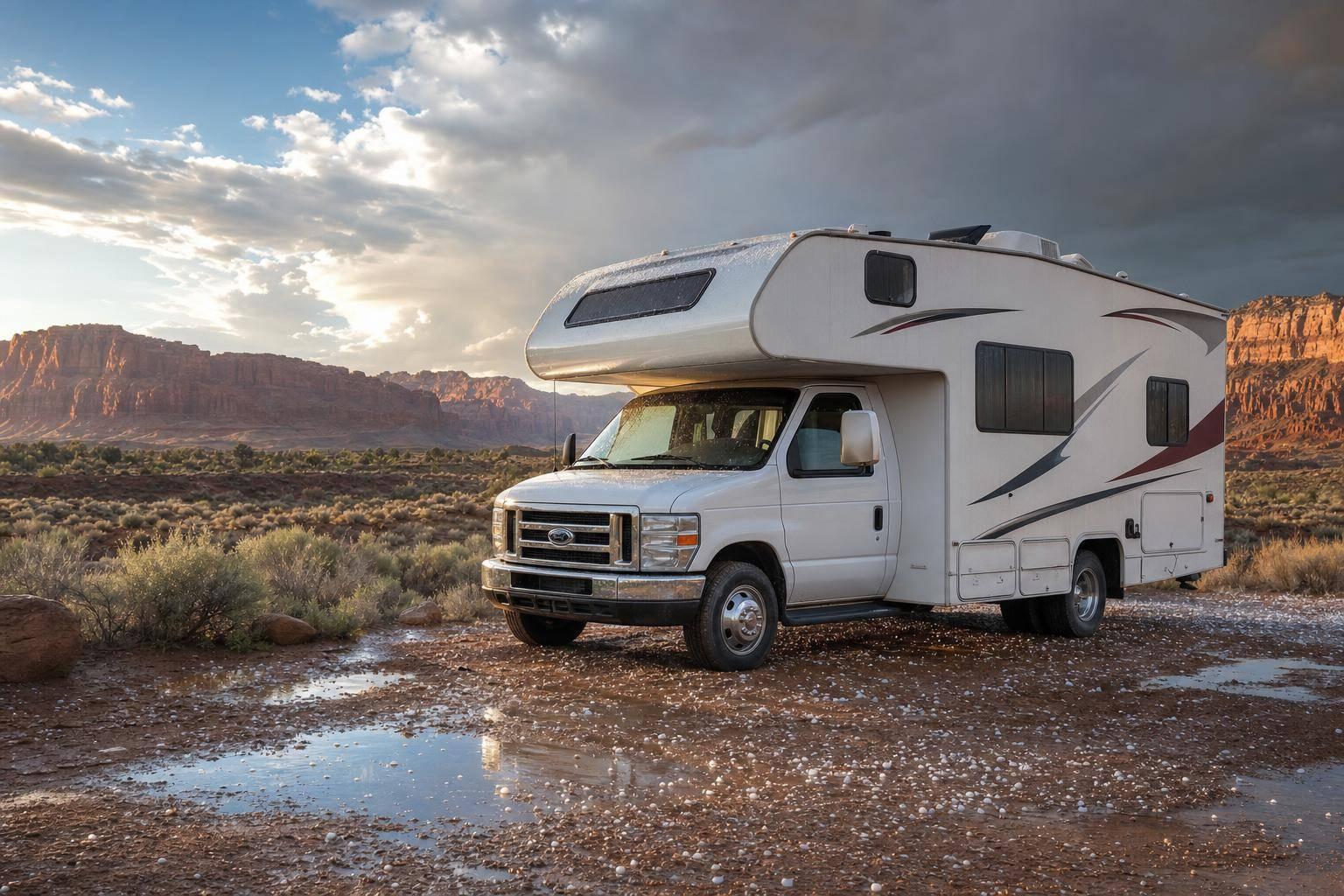
If you own an RV in Utah, the biggest risks are simple: sun, hail, road hits, and winter moisture. Those four issues can damage your roof, paint, fiberglass, seals, frame, and suspension - then turn a small fix into a repair bill worth hundreds or even thousands of dollars.
If I wanted the short version, here’s what I’d focus on right away:
One stat stands out: about 50% of hail dents may not show up on an unwashed vehicle in outdoor light. That’s a big reason many RV owners miss damage until later.
Here’s the core idea in plain English: if the damage is only on the surface, you may be able to handle small upkeep work yourself. But if water got in, paint cracked, metal creased, fiberglass broke, or the RV drives differently, it’s time to get it inspected.
| Issue | What to look for | Usual next step |
|---|---|---|
| Sun and storage damage | Faded paint, decal wear, dry seals, cracked clear coat | Inspect, reseal, refinish if needed |
| Hail and debris | Dents, chipped paint, cracked caps, broken lights | Wash, inspect closely, then estimate |
| Water intrusion | Soft roof spots, ceiling stains, swollen walls, mold odor | Repair leak source and dry damaged areas |
| Collision or frame trouble | Pulling to one side, uneven tire wear, poor door fit | Shop inspection and structural check |
Bottom line: I’d treat early inspection as the best way to limit repair costs, protect safety, and keep the RV ready for the road.
In Utah, RV damage usually shows up in three main ways: sun, impact, and winter moisture.
Strong UV exposure and long storage periods can wear down RV fiberglass, paint, decals, and seals faster in Utah. And once damage starts, storage can make it worse. If moisture gets into exposed material, the problem keeps spreading even while the RV is parked. For example, when clear coat or paint cracks, the exposed area can oxidize over time.
Seals and caulking can be just as much of a headache. When caulking dries out or seals start to shrink, even a tiny gap around a vent, skylight, or sidewall seam can let water in during a storm. That kind of leak often starts small and quiet, then turns into a water intrusion issue before the owner spots it. After those surfaces weaken, Utah roads and storms can turn minor wear into both visible damage and damage hiding underneath.
Canyon roads, steep grades, gravel, and flying debris can chip paint, crack front or rear caps, and damage trim or lights. Hail is another common problem. It can leave dents on roofs and other flat surfaces, and about 50% of hail dents aren't visible on an unwashed vehicle in outdoor light.
The harder part is what you can't see right away. A hard hit can damage impact-absorbing parts, sensors, or frame alignment without leaving an obvious dent. Rough towing and mountain passes can add stress to the frame too. In motorhomes with body-on-frame construction, damage can include bent or kinked structural rails. Common warning signs include pulling to one side or uneven tire wear. If an impact leaves behind an opening or weak spot, winter moisture can slip in and make the damage spread.
Utah's freeze-thaw cycles can speed up rust and paint damage, especially when seals are already failing. Snow load and falling branches can also damage roofs and trim. In many cases, the first clues show up inside the RV or just under the outer skin.
Watch for signs like:
Those are all warning signs of water intrusion that needs repair. And when they show up, the damage has often already moved beyond the surface.
Once a shop finds the damage, the next step depends on two things: what the RV is made of and how bad the damage is.
Fiberglass repair usually takes a few stages. The damaged area is ground down, patched, sanded, and then the gel coat or paint is refinished. It’s not just a matter of covering the spot and moving on. The surface has to be shaped back into place so it looks right and holds up on the road.
For dented metal panels, the method changes based on the finish. If the paint is still intact, paintless dent repair (PDR) is often the best option. In that process, technicians use specialized tools to work from behind the panel and push it back into shape without repainting.
If the paint is cracked or the metal is creased, that route usually won’t work. At that point, the repair shifts to sanding, filling, priming, and repainting. Hard hits can also crack the clear coat, which may lead to oxidation or corrosion if the damage sits too long. In Utah, strong sun and hail often make the difference between a panel that can be repaired and one that needs refinishing.
Roof damage is a different animal because water doesn’t always stay where it starts.
Roof repairs should start with a close inspection, since photos often miss the full extent of the damage. What looks like a small leak on the surface can turn into a much bigger repair once the shop checks underneath.
When water intrusion is part of the problem, the repair plan has to deal with damaged seals and any hidden moisture before the area is sealed again. In Utah, sealers need to match the roof material and cure the right way in local conditions. That part matters more than many owners expect. If moisture gets trapped inside, it can weaken the structure and drag down the RV’s value.
Putting off a minor roof issue can snowball into paint deterioration, rust formation, and water leakage through damaged seals.
When impact damage reaches the chassis, the job moves past appearance and into how the RV drives and holds together.
After a collision or hard impact, the body damage you can see is often only part of the problem. A bumper might look like the main issue, but there can also be compromised crash absorbers, damaged sensors, or alignment trouble that affects safety and performance.
Shops usually begin this kind of repair with a 3D measuring system. That lets them compare the structure to factory specs before any pulling starts. For motorhomes built on a body-on-frame chassis, the chassis is measured on a frame machine and, if it can be repaired, straightened with hydraulic equipment.
There are usually clues when the structure has shifted. Buckled corners or doors that no longer close cleanly can point to structural movement. Suspension and alignment are also checked during the same assessment. That makes sense, because frame and suspension damage can change steering, increase tire wear, and create road safety issues.
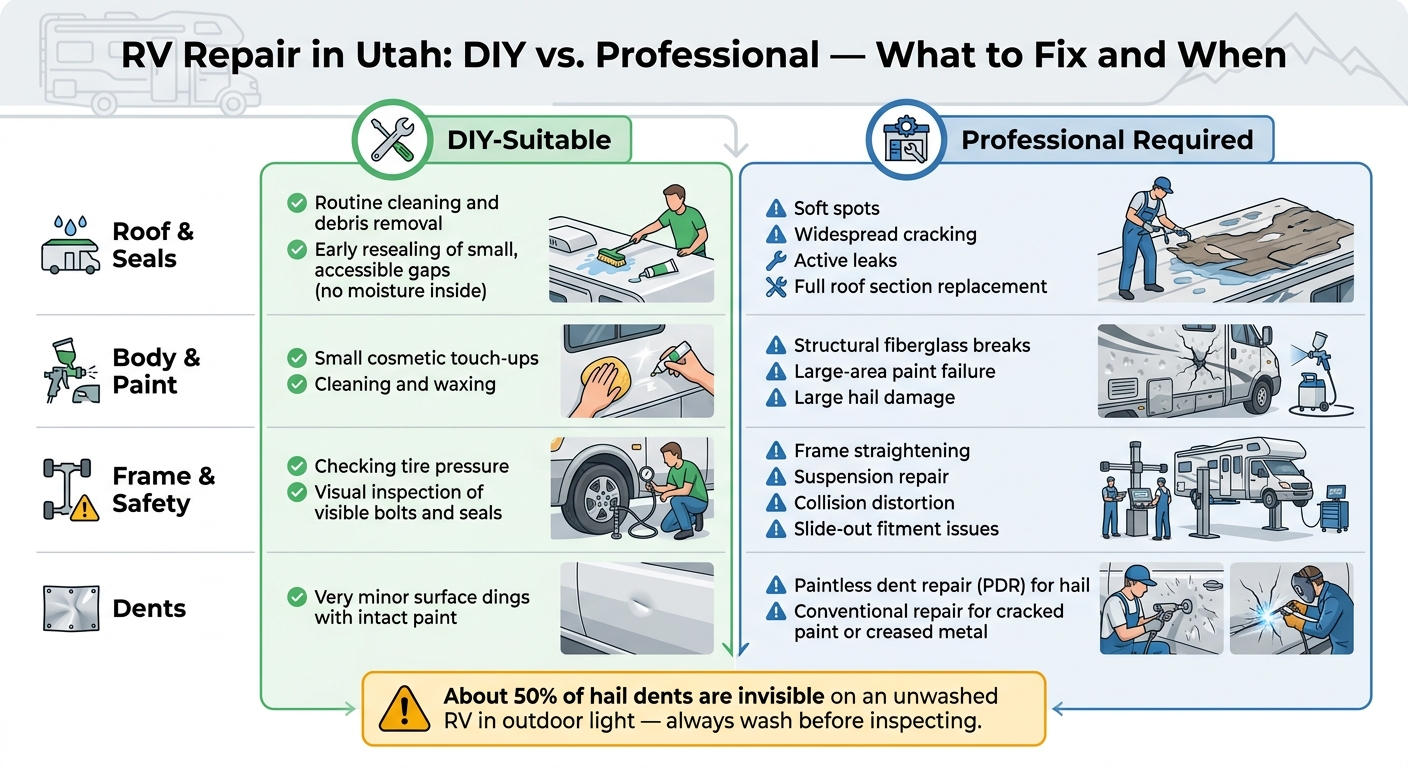
RV Repair in Utah: DIY vs. Professional - What to Fix and When
Knowing where the line is between a weekend fix and a shop job can save you money, protect your RV’s value, and keep you safe on Utah roads.
Most RV owners can take care of a short list of basic maintenance jobs on their own. That includes routine cleaning and debris removal, putting on a protective cover before storm season, checking easy-to-reach seals, and doing small cosmetic touch-ups with approved materials.
You can also handle early-stage resealing on a small, accessible gap before any moisture gets in. That’s the key part. If it’s small, easy to reach, and still just surface wear, it’s usually a reasonable DIY task.
Timing matters here. If you find a soft spot in the roof or wall during a routine seal check, stop. That usually means water has already made its way inside. The same goes for widespread cracking across more than one seam or any active leak. Once the damage goes past the surface, it’s time to step away and move to a shop.
Once damage moves past the surface, DIY can go sideways in a hurry. What looks like a small issue on the outside can hide a lot more underneath. Collision damage, in particular, often goes beyond visible dents and may affect the structure, sensors, or alignment.
Jobs like structural fiberglass breaks, large-area paint failure, large hail damage, roof section replacement, frame distortion, suspension issues, and anything that affects slide-out fitment need shop tools and trained hands. Dent Master Collision, serving Lehi, Salt Lake City, and nearby areas, handles RV body repair, frame straightening, paintless dent repair (PDR), paint, and diagnostics.
PDR can be a smart option after hail because it preserves the factory finish and helps maintain resale value. But there’s a catch: it only works if the paint is still intact. If the paint is cracked or the metal is sharply creased, a different repair method is usually needed.
Once repairs move past the surface, the estimate becomes the next thing to focus on.
Here’s a quick way to sort the job:
| Repair Type | DIY-Suitable | Professional Required |
|---|---|---|
| Roof & Seals | Routine cleaning and debris removal; early resealing of small, accessible gaps | Soft spots; widespread cracking; active leaks; full roof section replacement |
| Body & Paint | Small cosmetic touch-ups; cleaning and waxing | Structural fiberglass breaks; large-area paint failure; large hail damage |
| Frame & Safety | Checking tire pressure; visual inspection of visible bolts and seals | Frame straightening; suspension repair; collision distortion; slide-out fitment issues |
| Dents | Very minor surface dings with intact paint | Paintless dent repair (PDR) for hail; conventional repair for cracked paint or creased metal |
Before you approve repairs, look over the estimate closely. Make sure it covers hidden damage, ask how supplements are handled, check parts timing, and ask how the shop handles paint matching. Those details can change both the cost and the time your RV stays in the shop.
You also have the right to choose any licensed repair facility in Utah, no matter what your insurance company suggests.
A photo-based estimate gives you a cost baseline before you compare repair cost and claim value. It also helps you line up the repair cost, your deductible, and the value of filing the claim.
Once you know the RV needs repair, the next move is simple: decide whether to file a claim or pay out of pocket.
Photo estimates can miss hidden RV damage. That happens a lot with hail dents, especially on dirty or unwashed surfaces. An in-person inspection from a pro, after the RV has been washed and dried, is the best way to judge the full extent of the damage. Direct sunlight or a flashlight held at a low angle can also make surface ripples and shallow dents easier to spot.
Then comes the part many owners don't see coming. Once a shop starts teardown, more damage often shows up underneath. When that happens, the shop usually files a claim supplement - an updated claim that covers costs not included in the first estimate. It's smart to ask how the shop documents hidden damage, how it handles claim supplements, and whether it works directly with your insurer.
You should also check your policy for a separate wind and hail deductible. In many cases, it's higher than the standard comprehensive deductible.
Here’s the usual claim path for each type of damage:
| Damage Type | Typical Approach | Notes |
|---|---|---|
| Minor cosmetic dings | Pay out of pocket | Repair cost is often below the deductible. |
| Hail damage | Use insurance (comprehensive) | Multiple dents usually exceed deductibles and are usually covered under comprehensive. |
| Collision or structural | Use insurance (collision) | High costs and hidden frame damage make insured professional repair the safer path. |
| Active leak | Use insurance or repair immediately | Delays can lead to mold and structural rot. |
Keep your maintenance records, too. Seasonal roof inspection logs and seal-check notes can help show that water damage came from one storm event instead of long-term neglect. That can matter when an insurer reviews the claim.
After repairs, routine checks go a long way toward keeping the same problem from coming back.
Inspect roof seals twice a year, then check them again after major storms - once before peak summer heat and once before winter storage. If a big storm rolls through, do a quick visual check of the roof, caps, and seams.
Wash and inspect painted and fiberglass surfaces on a regular basis in direct sunlight or under bright lighting. Clear coat fractures and early paint adhesion issues are much easier to catch before they spread.
A few habits help:
Unrepaired hail damage can cut into resale value and make later claims harder to deal with.
Utah’s intense sun, mountain travel, hail, and winter weather can wear down an RV fast. Roof leaks, fiberglass damage, paint problems, and frame issues may look like separate problems, but they all point to the same lesson: catch damage early, and the repair bill is usually smaller.
Each type of damage has a point where DIY no longer makes sense. For roof, body, paint, and frame concerns - especially structural repair and refinishing - it’s often smarter to get a qualified shop involved. Good documentation, clear estimates, accurate claims, and steady maintenance help keep your RV safe, keep its value in better shape, and keep it ready for the road.
Regular inspections help protect your RV’s structure and keep it safe on the road.
After any accident, have certified technicians inspect it for hidden frame or alignment damage. And after a hailstorm, don’t wait around - get a professional inspection right away. Some impact damage can be easy to miss at first glance.
Steady checkups can spot problems early and may help you avoid bigger, more expensive repairs later.
For safety and to help protect your RV’s long-term value, it’s smart to get a professional inspection for most damage. A DIY fix might look fine at first, but if the repair isn’t done all the way, it can lead to mechanical problems, water leaks, or a lower resale price.
You should always go to a repair shop for structural issues, including frame or suspension damage. The same goes for specialized paint work and more involved fiberglass repairs.
File an insurance claim when you spot visible damage that affects your RV’s performance, safety, or resale value, such as frame issues or hail dents.
Start by taking clear photos of the damage, checking your comprehensive coverage, and talking with a professional technician for an accurate repair estimate. That gives you a better sense of whether the repair bill is worth filing a claim, especially once you factor in your deductible. It’s also smart to move fast, so small damage doesn’t get worse or make a later claim harder to sort out.
