

September 13, 2026
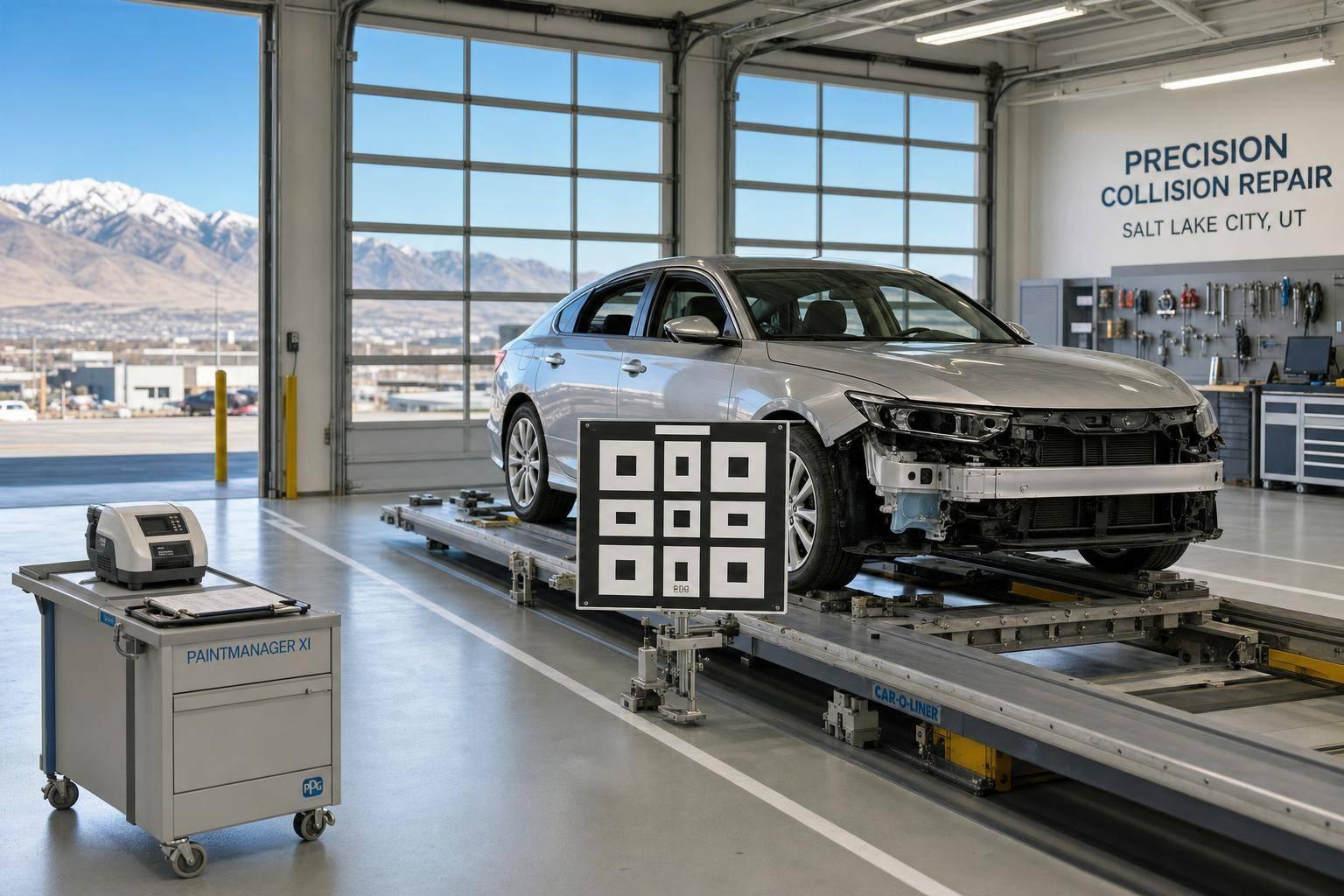
After a crash, the best shop is the one that can prove the repair was done right. If I were choosing a collision shop in the Salt Lake City area, I’d check five things first: I-CAR Gold Class training, frame-measuring tools, ADAS calibration, paint-match process, and a written warranty.
Here’s the short version:
If I were comparing shops, I’d ask for:
Here’s the main takeaway: a shop that only fixes the look of the damage is not enough. I’d want one that handles the structure, electronics, paint, and paperwork too.
| Repair need | What I’d check | Warning sign |
|---|---|---|
| Small dents / hail | PDR if paint is still intact | Shop pushes repaint right away |
| Crash damage | Frame measuring and repair records | No structural measurements |
| Newer cars with sensors | ADAS calibration and scan printout | Shop says calibration is not needed |
| Paint work | Blending into nearby panels | Color mismatch or hard paint lines |
| RV / motor home | Large-body repair setup | Shop does not handle oversized units |
For a local option, the article points to Dent Master Collision in Lehi. It notes I-CAR Gold Class status, Nissan, Hyundai, and Genesis repair certifications, ADAS calibration, RV repair, PDR, computerized frame measuring to 0.1 mm, PPG MoonWalk paint mixing, and a 4.9-star Google rating from 350+ reviews.
Below, I’d break down how to judge a shop and what makes one worth shortlisting.
Match the shop to the damage before you ask for estimates.
Small dings, door dents, and hail damage don't always need paint work. Paintless dent removal (PDR) lets a technician reshape the panel from behind the surface, with no sanding, no filler, and no repainting. It's a good fit when the paint is still intact and the dent is shallow. In many cases, the job takes just one day.
If the paint is cracked, or the dent is too deep for PDR, standard panel repair makes more sense. That usually means reshaping the panel, adding filler if needed, and refinishing the area so it matches the vehicle's original color.
Bigger hits are a different story. At that point, you may be dealing with structural damage, not just surface-level repairs.
Major impacts can throw the vehicle's structure out of alignment. Many newer vehicles use unibody construction, which means the frame and body are built as one unit. Getting that back into shape takes computerized measuring systems to spot even small frame deviations, plus hydraulic pulling equipment to restore factory alignment.
Trucks and older SUVs with body-on-frame construction are built differently. The frame is separate from the body, so it can be removed and straightened on its own. Refinish work may also be part of the repair, and that work needs to stay within OEM limits when sensors are involved.
RV damage is its own category and usually needs a shop set up for oversized body work.
RV body repair is a separate specialty. Motor homes and travel trailers often involve large fiberglass panels, big paint surfaces, and oversized refinishing equipment.
If your RV has panel damage, a fiberglass crack, or needs large-format refinishing, check up front that the shop has the space, tools, and technician experience to do the job right.
From there, you can use these repair types to judge whether a shop can show the training, equipment, and warranty coverage you want.
How to Choose a Quality Collision Repair Shop in Salt Lake City
Once you know what kind of repair your car needs, the next step is judging the shop itself. That’s the difference between a repair that looks fine and one that’s done safely. The repair type tells you what needs to happen. Shop quality tells you whether it’ll be done right.
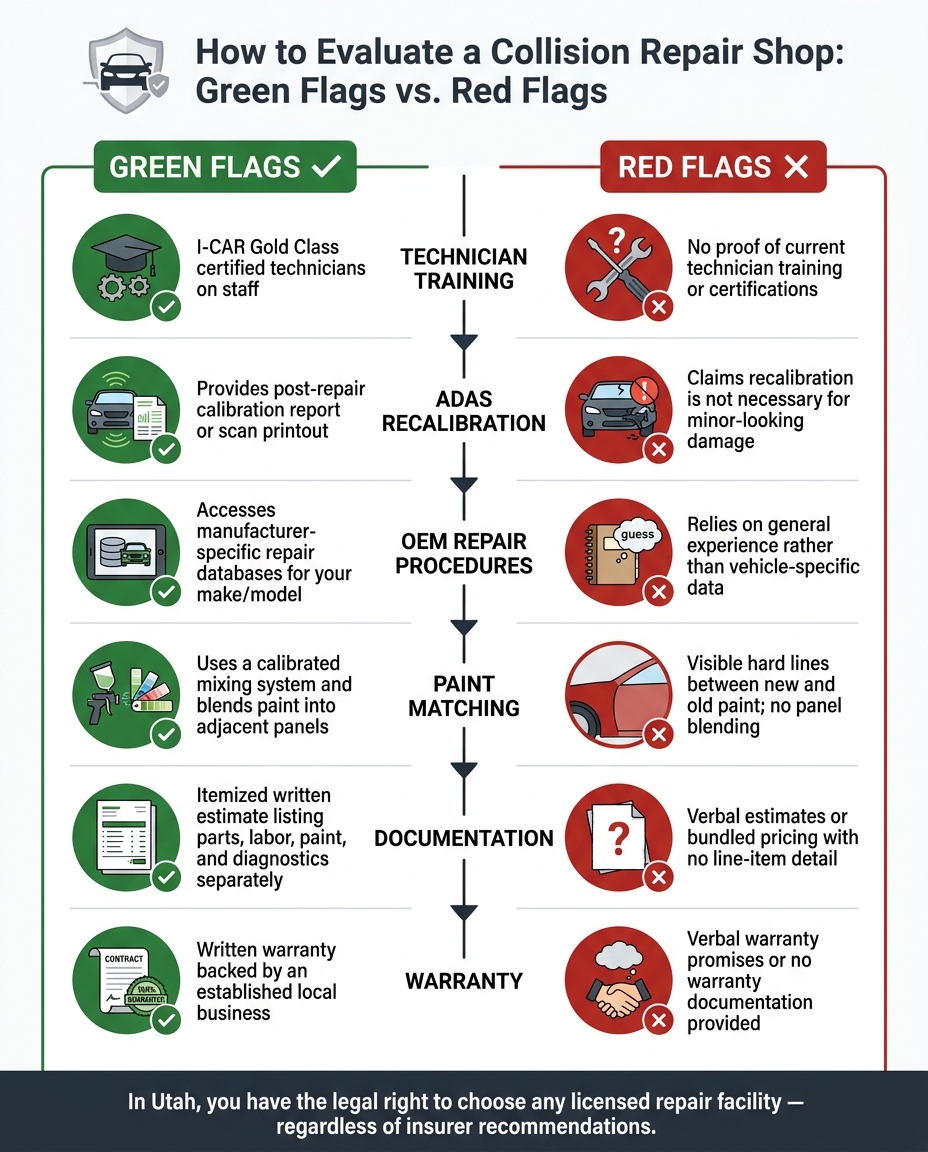
Start with technician training. Ask whether the shop has I-CAR Gold Class status. That shows the team stays current on modern repair methods.
Then go a step further. Ask whether any technicians have ASE certifications and whether the shop follows OEM repair procedures for your exact make and model. This matters most for airbags, sensors, and other safety-related systems. OEM procedures are there to help bring the vehicle back to factory specs.
Parts also matter more than many drivers think. Ask how the shop handles parts selection. A straight-shooting shop should clearly tell you whether the estimate includes new OEM parts, aftermarket parts, or recycled parts, and why. For airbags or ADAS sensors, that’s not a small detail.
This is where training matters most: when a shop needs to follow OEM procedures, scan systems, and recalibrate sensors.
Certifications are one piece of the puzzle. Equipment is the next one.
For frame work, the shop should use computerized measuring systems. If your car needs ADAS recalibration, ask for a post-repair calibration report or scan printout. That gives you proof the work was completed.
Paint work deserves the same level of scrutiny. Ask what mixing system the shop uses and whether technicians blend paint into adjacent panels. That’s how shops avoid an obvious mismatch between the new paint and the old finish.
Here’s a simple way to size things up:
| What to Look For | How to Verify It | Red Flags |
|---|---|---|
| I-CAR Gold Class | Look for the Gold Class logo on-site or on their website | No proof of current technician training |
| ADAS Recalibration | Ask for a post-repair calibration report or scan printout | Shop says recalibration "isn't necessary" for minor-looking damage |
| OEM Repair Procedures | Ask if they access manufacturer-specific repair databases | Shop relies on "experience" rather than vehicle-specific data |
| Paint Matching | Ask about their mixing system and blending process | Visible lines between new and old paint; no blending on adjacent panels |
| Diagnostic Scans | Request a printout of the post-repair electronic system scan | Warning lights cleared without a full system diagnostic |
| Documentation | Ask for an itemized estimate separating parts, labor, and diagnostics | Verbal estimates or bundled pricing with no line-item detail |
Once you’ve looked at workmanship, turn to how the shop handles pricing, supplements, and warranty terms.
A written estimate should list labor, parts, materials, and diagnostic work as separate line items in clear U.S. dollar amounts. If damage shows up after disassembly, the shop may need to file a supplement for insurer approval. That part is common. What matters is how the shop handles it. A good shop will work with your insurer and keep you posted without making you chase updates.
For warranties, get everything in writing. A verbal promise of a lifetime warranty doesn’t mean much if the shop isn’t around later to honor it, especially with temporary storm-chasing shops. And in Utah, you have the legal right to choose any licensed repair facility, no matter what your insurance company recommends. A shop that explains that right clearly and works with your insurer while keeping you in the loop is looking out for you.
Dent Master Collision lines up well with the checks above. The shop is based in Lehi, UT, at 710 N 400 E, and serves drivers across the Salt Lake City area. It holds I-CAR Gold Class status and carries repair certifications for Nissan, Hyundai, and Genesis. It also has a 4.9-star average from more than 350 Google reviews.
When a vehicle has structural damage, precision matters. Dent Master uses computerized measuring systems that document frame geometry to 0.1 mm precision. That kind of detail helps when a shop needs to bring a vehicle back to manufacturer specs instead of just making it look straight.
On the paint side, Dent Master uses the PPG MoonWalk mixing system with waterborne base coats. Technicians also blend paint into adjacent panels, which helps the repaired area match the rest of the vehicle more closely. That’s a big deal, because even a solid body repair can still stand out if the color is off by a shade.
Dent Master doesn’t stop at standard passenger vehicles. The shop also handles RV and motor home body repair. That can save time for owners who need a shop equipped for larger vehicles instead of hunting for a separate specialist.
For lighter damage, Paintless Dent Repair (PDR) is available when the paint is still intact. With PDR, technicians remove minor dents without sanding or repainting, which helps preserve the factory finish and vehicle value.
The shop also performs ADAS recalibration and post-repair diagnostic scans. In plain English, that means it checks that sensors, cameras, and safety electronics are working the way they should after repairs.
Dent Master also supports the parts of the repair process that many drivers dread most: estimates, paperwork, and insurance back-and-forth. The shop offers free online estimates, so you can send in photos and repair details through the website and get a ballpark cost and repair-time estimate before moving ahead.
It also works with insurers and provides written estimates along with warranty coverage details. For someone dealing with crash damage, that kind of support can make the process feel a lot less chaotic.
After you check training, equipment, estimates, and warranty terms, one question matters most: Can the shop prove the repair?
A shop you can trust shows proof with documentation, not promises.
That includes trained technicians, written estimates that account for hidden damage, documented structural measurements, paint-match proof, and a warranty backed by an established local business. It also includes a shop that handles insurance communication without dumping the whole process on you.
Before you sign off on any repair, go through these checks:
If you want a local shop that lines up with these standards, Dent Master Collision is a practical place to start. For Salt Lake City drivers and RV owners, Dent Master Collision in Lehi offers collision repair, frame straightening, auto painting, RV body repair, PDR, diagnostics, and free online estimates.
If your vehicle has been in a collision, it should have ADAS recalibration even when the sensors or cameras don't show visible damage. A small hit can still throw off alignment and make these safety features less dependable.
Make sure your collision repair shop uses advanced diagnostic tools and handles recalibration to manufacturer specifications. If not, your safety systems may not work the way they should after repairs.
Yes. As a vehicle owner, you can choose your own repair shop for collision repairs.
In Salt Lake City, it helps to pick a reputable shop that works directly with insurance companies. That can make the process a lot smoother. A professional shop can document the damage, talk with adjusters, and send supplemental repair details when needed to support proper, manufacturer-compliant repairs.
PDR works best for small dents and dings, especially hail damage, when the panel can be brought back into shape without sanding, filler, or repainting. It usually costs less and takes less time.
Traditional body repair is the better fit for heavier damage, including structural problems, deep paint damage, or panels that have been compromised. A professional inspection by certified technicians can help determine the right repair method.
