

November 15, 2026
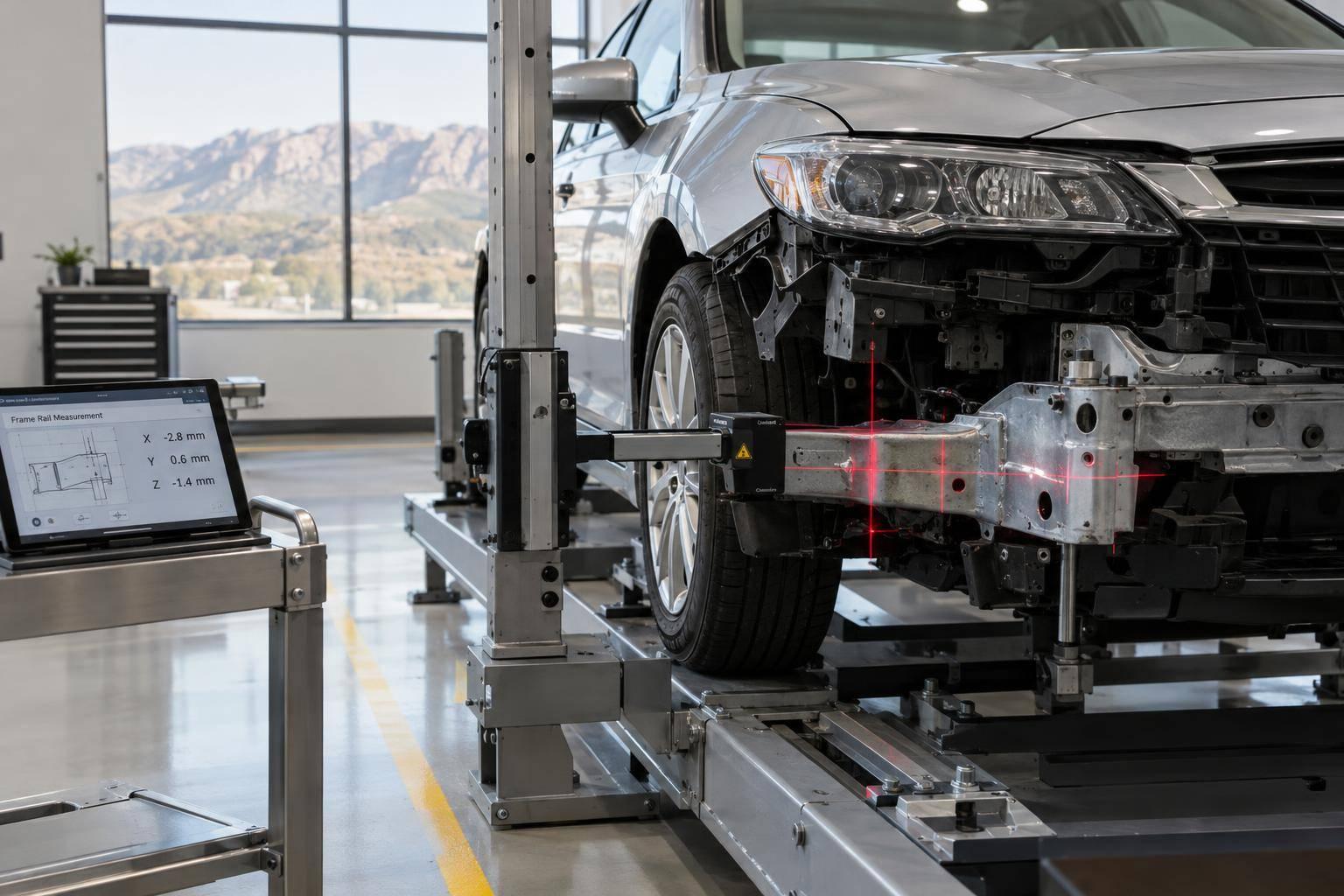
Frame damage adds costs beyond bodywork and paint. Start with a structural inspection and 3D measurements to find out what can be repaired, what needs replacement, and whether a safe repair is possible.
The estimate may also include suspension repairs, wheel alignment, paint, and required safety-system calibration. Vehicle design, damage severity, labor rates, and parts availability all affect the total.
For Utah vehicle and RV owners, the next steps are clear:
Frame damage is bending, kinking, tearing, or deformation in a vehicle’s structure. The more damage there is, the more time inspection and repair take. The extent of the damage also affects the repair method and final cost.
How a vehicle is built determines which parts carry the load - and how technicians repair them. It also affects labor, equipment, and repair time.
| Feature | Body-on-Frame | Unibody |
|---|---|---|
| How it’s built | A separate frame supports the body | The body and supporting structure form one unit |
| Typical vehicles | Trucks and older SUVs | Most modern cars and crossovers |
| Common damage points | Main rails, crossmembers, and suspension mounts | Structural rails, suspension mounts, floor pans, firewall areas, and crumple zones |
| Repair method | The frame can be measured and straightened separately | Computerized measuring and hydraulic pulling return the structure to factory specs |
Unibody repairs leave less room for error because the body and frame form a single unit. RV construction varies, so each vehicle needs an inspection based on its specific design.
Once the construction type is clear, technicians need to check for damage that isn’t visible from the outside.
Ask whether the shop will use a 3D measuring system to check the structure against factory specs. Those measurements help determine whether the structure can be restored.

How Frame Damage Severity Affects Repair Costs
Once hidden damage is measured, the estimate turns to the work needed to restore the structure.
Repair costs depend on the required procedures - not just what you can see. The location and severity of the damage determine the repair method and parts needed. Local labor rates and parts availability also affect the price and turnaround time.
The estimate should list diagnostic scans, disassembly, measuring, frame-rack setup, and straightening separately. Manufacturer-approved sectioning or replacement may add parts and specialized joining labor. Damaged steering, suspension, or restraint components bring separate costs, too.
A supplement documents newly discovered work. If disassembly reveals hidden structural damage, the repair may need more labor or parts.
Structural repairs may also require corrosion protection, paint, reassembly, wheel alignment, and post-repair diagnostic scans. Include ADAS calibration whenever manufacturer procedures require it. A diagnostic scan does not replace calibration. RV size, construction, and access can also increase labor and equipment costs.
These are illustrative tiers, not fixed classifications. The price depends on the required procedures and affected components. Costs tend to climb faster as damage reaches more of the structure, suspension, or safety systems.
| Damage category | Likely work | Cost factors | Common related work |
|---|---|---|---|
| Limited structural correction | Minor straightening; measuring to verify tolerances | Fewer labor hours; minimal parts; setup fees | Bracket replacement; wheel alignment |
| Moderate rail or mounting-point damage | Frame-rack setup; hydraulic pulling; approved sectioning | More setup and pulling labor; equipment fees | Suspension or steering repairs; ADAS calibration |
| Extensive structural replacement | Major disassembly; approved sectioning or rail replacement | High labor and parts costs; corrosion protection; refinishing | Crumple zone components; airbag and restraint systems |
Once you have a repair estimate, the next step is deciding whether the vehicle is worth fixing. A safe repair isn’t always cost-effective. Part of that decision comes down to the vehicle’s pre-collision actual cash value (ACV) - its estimated market value before the crash.
Whether a part can be straightened, sectioned, or replaced depends on its material, where the damage occurred, and the manufacturer’s limits. Crushed, torn, or severely bent sections may need replacement. Ask which manufacturer procedure permits the proposed repair. Also request before-and-after measurement reports showing that the structure meets factory tolerances.
Even when repairs are possible, replacing extensive structural sections can cost enough for the insurer to declare the vehicle a total loss.
The insurer weighs repair costs, likely supplemental repair costs, ACV, and salvage value under the Utah rule that applies. For a Lehi claim, ask the insurer to identify that rule and provide its calculation.
Settlement terms depend on the accuracy of the valuation, your policy terms, state rules, and whether the vehicle can be repaired. Check that the valuation report lists the correct mileage, equipment, and condition, along with local market comparisons.
Want to keep a totaled vehicle? Get the reduced payment amount and title requirements in writing before accepting.
The two outcomes differ mainly in the work required, the paperwork, and the effect on ownership.
| Item to review | Repair outcome | Total-loss outcome |
|---|---|---|
| Work and documentation | Approved structural repairs, refinishing, required calibration, and completed repair records | ACV report and settlement calculation, including any applicable deductible |
| Title and ownership impact | Keep structural damage and repair records; damage can affect resale value | Keeping the vehicle may reduce your payment, require a salvage or rebuilt title, and affect insurance options and resale value |
Once you know whether repair or total loss is likely, document the repair plan. The final estimate should cover what’s needed to restore structural integrity - not just appearance. Weigh the repair cost against whether the vehicle can be repaired safely and what it’s worth.
If steering, suspension, restraint systems, or structural integrity may be compromised, have the vehicle towed. Photos may not provide enough detail for a reliable estimate, so a closer inspection may be needed. Before driving again, have the vehicle’s structural integrity checked against factory specifications.
If the vehicle isn’t safe to drive, document the damage before approving repairs.
Keep the estimate, supplements, structural measurement reports, and required calibration records. These documents can help show repair quality or support a total-loss claim. If a total loss is proposed, keep the valuation report, too. Ask whether the repairs follow manufacturer procedures and preserve any applicable warranty coverage.
Start with a local estimate for a structural evaluation in Lehi, Utah. For frame straightening, collision repair, or RV and motorhome repair in Lehi, contact Dent Master Collision.
Yes. If the frame isn’t restored to factory specifications, even small misalignments can affect safety. They can cause uneven tire wear, steering that pulls to one side, and suspension alignment problems.
Incomplete repairs can also keep automatic emergency braking and airbag sensors from working as intended. Professional diagnostics are needed to confirm that the vehicle is back to a safe, pre-accident condition.
Yes, insurance often covers hidden frame damage, but repairs are subject to the insurer’s approval. Shops commonly find more damage when they take a vehicle apart. They then submit a supplement - a request for approval to cover the added repairs.
Dent Master Collision works directly with insurers and handles supplemental approvals so the claim reflects the full scope of repairs. For major or hidden damage, using insurance generally provides a safer, more structured path to coverage than paying out of pocket.
Frame damage can lower your vehicle’s resale value, even after repairs. Professional, high-quality structural repairs help protect both safety and value. Poor or incomplete work, on the other hand, can leave lasting alignment, paint, or handling problems that drive the value down further.
Dent Master Collision in Lehi, Utah, uses computerized laser measuring and frame-straightening equipment to help restore your vehicle’s structural integrity and protect its future resale value.
